

Lab Notes
Marketing Blog

Is Your Brand Ready for the Big Screen? A Checklist for Launching on CTV
Connected TV (CTV) has officially moved from a “nice-to-test” channel to a core component of performance-driven media strategies. But while the big screen offers premium reach, precise targeting, and serious storytelling potential, many brands still underestimate what it actually takes to launch effectively. CTV isn’t just a repackaged TV buy or a fancier version of display—it’s a hybrid of broadcast-level creative, programmatic-level targeting, and digital-grade measurement. That blend unlocks new opportunities, but also introduces new pitfalls.

The Programmatic Supply Chain Is a Mess — Here’s How to Clean Yours Up
The programmatic supply chain has become bloated, opaque, and costly—yet most brands don’t realize how much waste sits between their media dollars and actual human attention. This guide breaks down why the supply chain is such a mess, where the inefficiencies hide, and the practical steps modern marketers can take to rebuild a cleaner, leaner, more transparent path to conversions.

Creative Formats for Streaming: What Works (and What Doesn’t) on the Big Screen
CTV is no longer “digital video on a bigger screen.” It has become its own creative environment—part television, part digital, part immersive experience—where traditional ad rules don’t always apply, and social-first creative often falls flat. As audiences migrate to streaming platforms and advertisers shift their budgets accordingly, the creative itself becomes a central determinant of performance. This guide breaks down the creative formats, structures, and principles that succeed on Connected TV, along with the pitfalls that undermine impact and efficiency.

Creative Matters in Programmatic (Yes, Really): Optimizing Ad Assets for Scale
Programmatic advertising is powered by algorithms, data, and automation—but none of it delivers results without strong creative. As inventory fragments across channels and attention becomes harder to earn, the creative itself becomes a primary performance driver. This long-form guide explains how creative truly functions inside programmatic ecosystems, why it impacts scale more than most brands realize, and how to design, test, and optimize assets that unlock volume, relevance, and efficiency.

Targeting Households, Not Eyeballs: How CTV Changes Audience Strategy
Targeting Households, Not Eyeballs: How CTV Changes Audience Strategy explores the shift from mass reach to smarter, more strategic audience targeting through Connected TV. As streaming becomes the dominant form of home entertainment, advertisers must evolve from broad demographic targeting to nuanced, household-level engagement. This blog examines how CTV's data-driven capabilities unlock precision, personalization, and performance measurement in ways traditional TV never could.
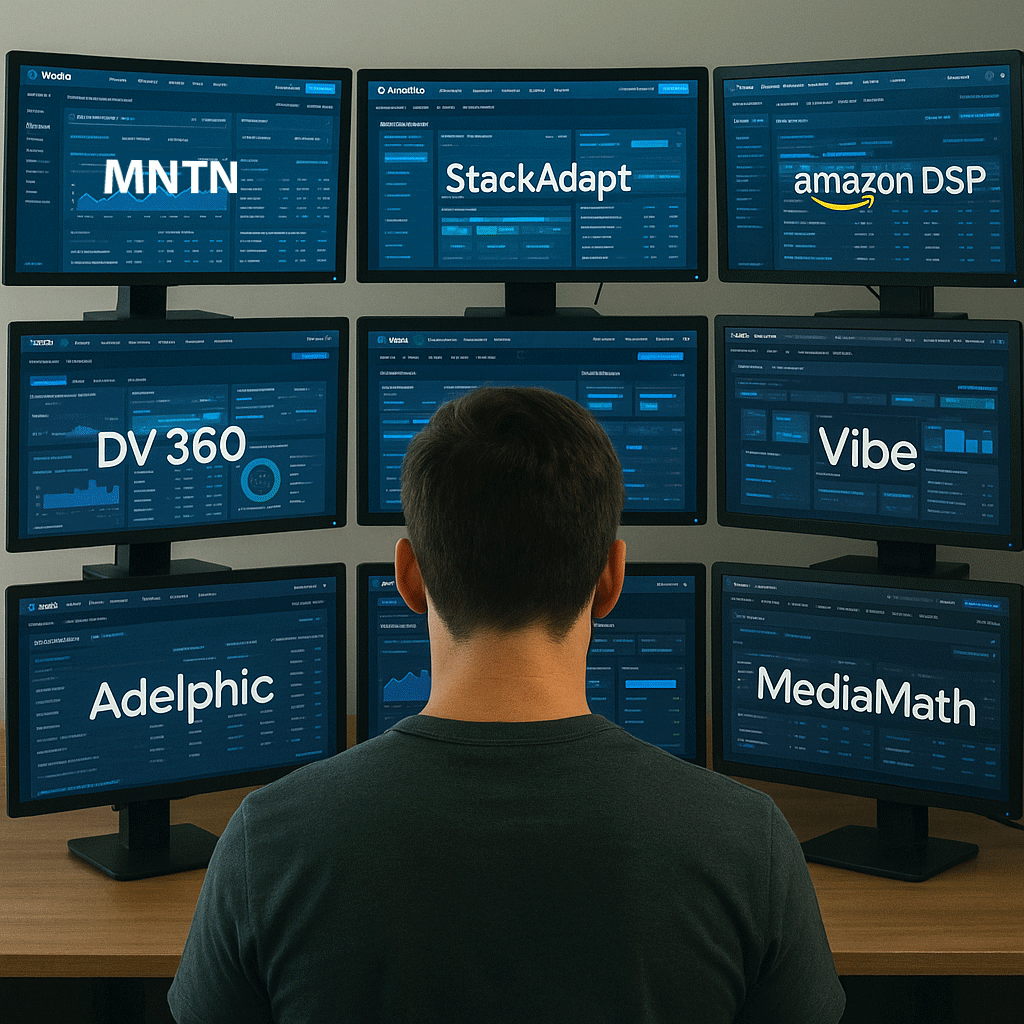
DSP Showdown: Choosing the Right Programmatic Platform for Your Brand Goals
Not all DSPs are created equal—and neither are your brand goals. Whether you're focused on awareness, performance, omnichannel reach, or data ownership, the right demand-side platform can make or break your programmatic success. In this comprehensive guide, we break down the top DSPs, what sets them apart, and how to match platform capabilities with your strategic marketing objectives.

The Algorithm Isn't Your Audience: Crafting Paid Social Ads That Impact Humans
It’s easy to fall into the social advertising trap: optimise to win the algorithm, measure for the platform, design for the machine. But here’s the truth: the algorithm isn’t your audience. People are. Their hopes. Their problems. Their attention and emotions. If our creative, targeting and messaging treat algorithms as the star instead of humans, we risk building campaigns that perform “by the book” yet fail to resonate, motivate or convert. In this article we’ll explore why you must centre humans — not the algorithm — in your paid social ads, how to build meaningful human-first creative and strategy, and practical steps you can implement immediately to align your campaigns with real people. Because when humans win, algorithms follow.